Planting Seeds of Learning with the Florida Headwaters Foundation
We’re a few paces into the new school year, and our blog tour with Melissa Robinson, program curator and educator for the Florida Headwaters Foundation, continues.
We promised you more insights. More conversations. More stories.
This month, we’re delivering all three. We’re taking a closer look at how the Foundation’s focus on hands-on conservation goes beyond simply introducing kids to an appreciation for nature. It’s part of a partnership that brings lessons from the Naturehood into the classroom and beyond.
A Natural Educator
Part of Melissa’s role with the Florida Headwaters Foundation, a not-for-profit dedicated to promoting environmental stewardship in cooperation with Sunbridge, is curating programs that educate residents and visitors through monthly events, experiences and, perhaps most importantly, a hands-on approach to environmental education.
Melissa wears plenty of hats as the Foundation’s curator and program guide. But the one she wears most proudly is that of an educator.
It’s an opportunity to ignite the imagination of a young mind that Melissa says drives the educational aspect of her role.
Her own curiosity about nature started at a young age, when her family relocated from Illinois to Central Florida. Suddenly, the plants and animals around her looked very different. She became fascinated by the contrasts between the Midwest she knew and the new environment she was discovering.
That curiosity never left. It eventually led her to earn a Bachelor of Science in Environmental Sciences from the University of Central Florida.
Today, it’s that same spark of imagination that Melissa tries to plant in every aspect of the Foundation’s work. Because curiosity encourages us to ask questions, make connections and, ultimately, learn.
Whether she’s leading an Eco Tour, curating a documentary film screening or working with Voyager K-8, an environmental STEM school serving Sunbridge and other communities around St. Cloud, Melissa looks for opportunities to connect the dots through hands-on learning.
And those connections can have a lasting impact. An appreciation for the natural world can grow into a lifelong interest and, for some young minds, perhaps even the beginning of a career.
The Importance of Bees
“I think if a person learns about conservation firsthand, it gives them a sense of personal responsibility for things.”
Melissa is particularly good at connecting the dots, and as she takes us on a flashback of one of her first times front and center in a classroom – it’s easy to see why.
“I was guest speaking for a small group of 10-year-olds,” Melissa recalls. “I was explaining the importance of bees, and they didn’t have the connection. They didn’t understand it yet.”
Then one little girl raised her hand.
“I’ll never forget. She asked me, ‘So if all the bees go away, we don’t have food anymore?’”
“Her eyes just completely switched,” Melissa says. “You know, it’s like she got it. A light bulb went off in her mind.”
It’s a relatable “lightbulb moment,” but it speaks to something much bigger about the Foundation’s approach to environmental education and Sunbridge’s own vision of building a community rooted in stewardship of its land and water.
Through Melissa’s programs and partnerships, the goal is to help residents, visitors and students see their own backyard as part of Central Florida’s larger ecosystem; the lakes and waterways surrounding Sunbridge are connected to the Everglades downstream; monarch butterflies and migratory birds flitting about Sunbridge’s trails are part of journeys that span thousands of miles.
The lesson may start with something as small as the specks of flower pollen , but it can lead to a much bigger understanding of the world around us.
Bringing the Lesson to Voyager K-8
Opening its doors in August 2024, Voyager K-8 became Sunbridge’s first STEM school, serving families in Sunbridge with a focus on environmental science. It’s part of an intentional learning ecosystem dedicated to STEM and sustainability that stretches throughout St. Cloud and the Greater Orlando region.
Today, the Florida Headwaters Foundation supports Voyager on an on-call basis, contributing guest speakers, helping with lesson plans and finding opportunities to bring environmental education to life.
Robinson gave us several examples from this partnership, but one immediately caught our curiosity. Mostly because we think it’s pretty fun to say, axolotl.
“The dean of the school came to me and he said he had these axolotls he got from Mexico and he thought they would be an excellent teaching tool for the students.”
Axolotls are rare salamanders (and, admittedly, incredibly cute) that have found a place in internet culture, thanks in part to Minecraft and their resemblance to the fantastical creatures of How to Train Your Dragon.
For Robinson and the Foundation, the axolotls were an opportunity to take something already sparking curiosity and turn it into a lesson about an endangered species.
“I would go over, and I bought all the supplies the school needed and helped set up the whole tank,” Robinson recalls. “Now it’s a focal point in the school with a little sign on the top that says, ‘Thank you, Florida Headwaters Foundation, for helping us with this.’”
It’s a small example of what the Foundation’s partnership with Voyager is all about: taking a student’s curiosity and giving it somewhere to go.
The Places You’ll Go
One of the Foundation’s goals is to show students just how many career opportunities can grow from an interest in environmental science.
“I got my degree in environmental studies because I knew that there are 100 different career paths you could take. You could do landscaping, you could work with cattle, you could do education like I’m doing. You could go into environmental engineering. There literally are limitless options.”
That idea of connection extends beyond the classroom, too.
The Foundation helps connect environmental lessons with real-world resources throughout the Sunbridge community, creating richer learning experiences while strengthening community connections.
“We are right across the street from a cattle ranch. We are down the road from one of Sunbridge’s top landscaping companies. There are so many people who are here to support you.”
As Voyager K-8 and the Florida Headwaters Foundation continue to grow, so will the opportunities to connect students with the world around them and show them where that curiosity might lead.
More Ways to Learn and Get Involved
With school back in session, the Florida Headwaters Foundation’s activity schedule is ramping up, too, with plenty of opportunities for residents, visitors and kids not old enough for school to learn about the beauty of being outside.
In the coming months, check the Foundation’s website for updates on:
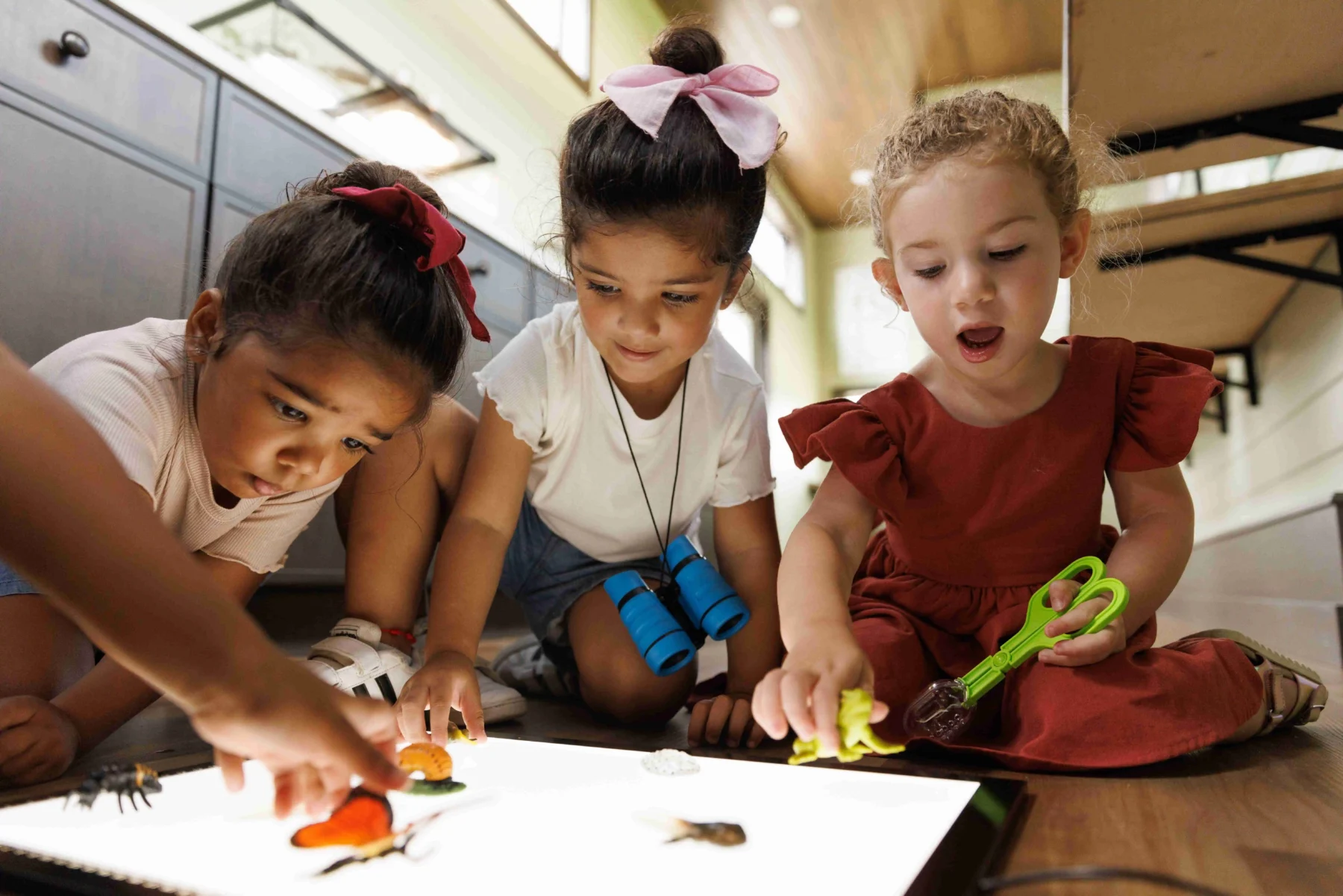
Little Explorers – Young children learn about Florida’s environment through games, crafts and hands-on activities; classes are limited to eight participants, registration is free and open to the public.
Eco Tours – Explore the edge of Deseret Ranch and Lakes Myrtle and Joel while learning about local ecology, Osceola County history and conservation, with tours offered the second Tuesday of each month and select Saturdays. Available to Sunbridge residents only.
Feature Fridays – Throughout the year, the Foundation will present educational and inspiring nature documentaries for Sunbridge residents hosted by Del Webb Homes; advance registration is required. Available to Sunbridge residents only.
Glass Recycling Sessions – Ever wondered how glass recycling actually works? Bring your glass containers to Sunbridge Basecamp on select dates and put them through a glass pulverizer provided by Osceola County as part of its hands-on recycling education and outreach.
Want to learn more about the Florida Headwaters Foundation and Voyager K-8? Look for more blogs soon.
And to stay up to date on everything happening in Sunbridge, swing by Basecamp for a visit.
What’s Happening